
28 June 2026
“Once You’ve Dined With a Georgian, You’re a Friend for Life” — A Conversation About Travelling Through Georgia
There are countries people visit for landmarks, and there are countries people remember through conversations, meals and toasts that somehow turn into life advice. As you can guess, Georgia firmly belongs to the second category.
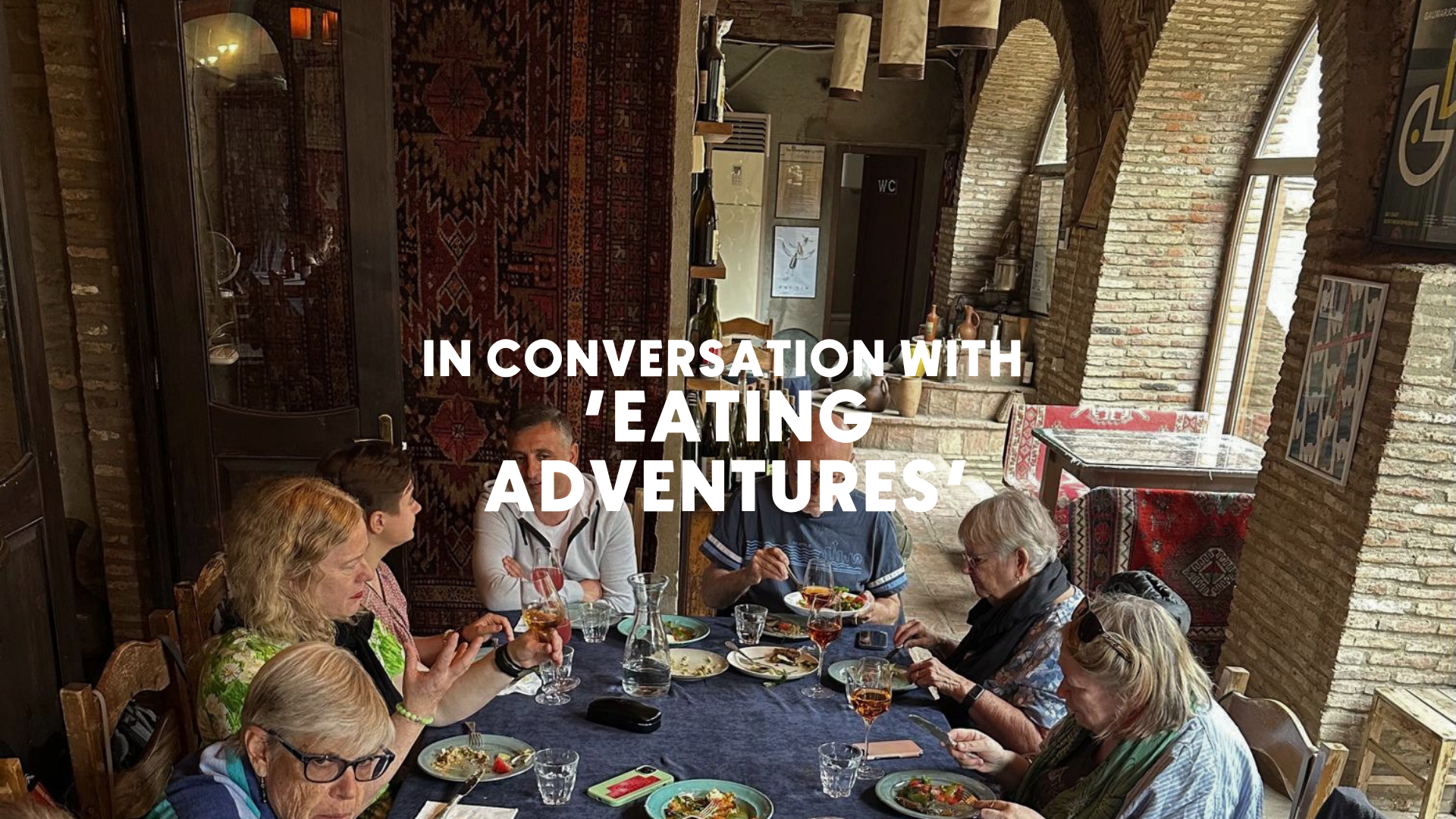
We spoke with boutique tour operators Janice Kirkwood and Sue Dempsey, whose Eating Adventures focus on food, wine and local experiences rather than checklist tourism.
What makes Georgia such a compelling destination for travellers looking for that deeper connection rather than selfies at the main sights?
Georgia sits at this ancient crossroads between East and West, Christianity and Islam, Europe and Asia, and you really feel that history constantly while travelling through the country. The Silk Road passed through here, there were Mongol invasions, Ottoman influence, Russian imperial rule, Soviet occupation — and all of those layers left traces in the architecture, the food, the wine traditions and even the mentality.
What fascinates us is how closely Georgian culture, Christianity and wine are tied together. Once you start noticing grape motifs carved into churches or hearing stories connected to vines and monasteries, you realise wine here was never simply agriculture or commerce, but was always cultural survival too.
There’s a famous story about Georgian soldiers carrying vine cuttings with them when they went off to war, so that even if they died far from home, the vine itself would survive. Whether people know the story already or not, it tells you a lot about how deeply wine is rooted in Georgian identity.
And then you see how this history shaped everyday life. In Kakheti, for example, people historically didn’t spend money on grand houses because invasions and raids were a real possibility. Instead, hospitality became the luxury. The supra became the centre of life. Food, wine and guests mattered more than possessions.
To really understand Georgia, you need to understand all of those things together rather than separately.
Georgian hospitality is famous, but difficult to explain until you experience it yourself. What tends to surprise your guests most?
Probably the intensity of it. People hear that Georgians are hospitable, but they don’t fully understand what that means until somebody they met two hours earlier is already packing homemade churchkhela into their bag “for later” and insisting they return with their entire family next year.
Once you’ve dined with a Georgian, you’re usually considered a friend for life.
Our guests are often surprised by how warmly people welcome them into their homes, vineyards and cellars. It doesn’t feel transactional. The hosts are genuinely generous with their food, wine and time, and there’s usually a sense that sharing all of this is a matter of pride rather than performance.
We’ve had lunches stretch into entire afternoons because nobody wanted the conversation to end.
And those moments are often the ones travellers remember most vividly afterwards. Not necessarily the famous sites, but sitting at a long table while somebody’s grandmother explains why her pickled jonjoli is better than her neighbour’s.
Many travellers know very little about Georgian wine before arriving. What creates the biggest reaction during your tours?
Amber wine, without question — although usually not immediately.
People often arrive expecting to either love it instantly or hate it completely, but what actually happens is more gradual. We normally introduce guests first to fresher, more familiar styles before moving towards fuller-bodied qvevri wines.
By the end of the trip, they usually become completely obsessed with amber wine and start trying to work out how to fit extra bottles into their luggage.
We also love introducing people to grape varieties beyond Rkatsiteli and Saperavi. In Ateni Valley we might focus on Chinuri and Tavkveri, in Imereti — Tsitska, Krakhuna and Tsolikouri, and in Samtskhe-Javakheti — Meskhuri Mtsvane.
Guests are often surprised by how regional Georgian wine culture is. Before coming here, many assume “Georgian wine” is one category, but once they start travelling around, they realise how dramatically styles change between regions.
Food surprises people too, perhaps even more than the wine. A lot of visitors still arrive expecting heavy Soviet-style food — boiled potatoes, cabbage, meat-heavy dishes — and instead discover all these fresh herbs, vegetable dishes, walnut sauces and sour flavours.
The acidity especially catches people off guard at first. Tkemali, alucha, vinegar-based dressings, savoury fruit sauces — Georgian cuisine often relies on sharpness and freshness rather than richness. And then suddenly people become completely addicted to it and start asking where they can buy tkemali back home.
Which dishes tend to become favourites?
That changes from tour to tour, but there are certain dishes people consistently fall in love with.
Chakapuli surprises many guests because it’s so herbal and fresh. Lobio with mchadi and pickles is another one, especially paired with amber wines. Kubdari usually becomes popular very quickly too, particularly after a long drive in the mountains when everyone is starving.
And then there are the flavours people remember rather than individual dishes.
For us personally, blue fenugreek smells and tastes like Georgia. Once visitors recognise it in lobio, pkhali or other dishes, they suddenly start noticing it everywhere.
People are also often surprised by how well amber wines work with meat dishes. They expect to automatically pair red wine with things like ostri or tabaka chicken, but a structured amber wine can work brilliantly because it has texture, tannin and savoury depth without overpowering the food.
A good Tavkveri with mtsvadi is also hard to beat.
Georgia is often introduced through huge numbers — 8,000 vintages, 525 grape varieties and so on. Which smaller details deserve more attention?
The regionality, definitely. Internationally, there’s still a tendency to reduce Georgian wine to a handful of grapes or a single style, but once you travel around the country, you realise how local everything is. Certain grape varieties belong very strongly to specific places, and that regional identity deserves far more attention.
Personally, we’d love to see more focus on red grapes beyond Saperavi — varieties like Tavkveri, Dzelshavi, Shavkapito or Ojaleshi. Even some excellent restaurants in Tbilisi still lean heavily towards Saperavi on their wine lists.
And really, one of the most special parts of Georgian wine culture is still family wine.
Almost every family has somebody making wine. It may not have labels or export ambitions or polished branding, but that doesn’t make it less meaningful. Some of the most memorable experiences for travellers happen in family homes, drinking homemade wine from reused mineral water bottles while eating food that somebody’s aunt has been cooking since early morning.
That side of Georgian wine culture shouldn’t be dismissed just because it doesn’t look commercial.
Beyond Kakheti, where should travellers go?
Imereti, absolutely. Kutaisi is a wonderful base because from there you can explore producers making fascinating lighter amber and white wines from varieties like Tsolikouri, Tsitska and Krakhuna. The atmosphere also feels very different from Kakheti — greener, softer, more humid.
Samegrelo is nearby too, which means visitors can discover Ojaleshi alongside Megrelian cuisine, which is one of the most distinctive regional food traditions in Georgia.
Samtskhe-Javakheti is another incredibly interesting region, both historically and gastronomically. Because of invasions and the region’s complicated past, wine production there became fragmented, but now you see people reviving old grape varieties like Meskhuri Mtsvane and Meskhuri Sapere.
The food there is fascinating too. You have things like apokhti, tenili cheese and traces of French monastic influence, including local snail dishes.
And if you stay in Akhaltsikhe, visiting Giorgi Natenadze’s wine bar is a must. He works with wild vines growing high up into trees, sometimes twenty metres above the ground, and if you meet him in person — which happens quite often — he’s wonderfully generous with both stories and wine.
What makes Georgia feel different from destinations like Tuscany, Bordeaux or Napa?
It still feels personal. In many famous wine regions, wine tourism has become extremely polished and structured, which is not necessarily a bad thing, but Georgia still feels much more spontaneous and intimate.
You can sit in somebody’s cellar with the winemaker themselves and end up talking not only about wine, but also about family history, difficult harvests, village life or why this year’s Kisi behaved terribly in the vineyard.
There are fewer barriers between visitors and producers. And while you absolutely need to do your homework and arrange appointments properly — or join a small tour — the reward is access to experiences that still feel genuine rather than heavily staged. Georgia has not lost that yet.
Finally, what would you say to somebody hesitating to book a trip to Georgia?
Go now, while Georgia still feels slightly undiscovered. Especially if you love wine. It’s difficult to think of another country where ancient winemaking traditions are still so visibly alive in everyday life rather than preserved behind glass.
And one more thing people often don’t expect: Georgia is much safer than many visitors assume before arriving. Travellers sometimes worry because of the broader region, but then they actually spend time here and realise how comfortable and welcoming it feels.
The funny thing is that even after several days of tastings and cellar visits, many guests still don’t fully understand qvevri winemaking until almost the very end of the trip. We often visit Iago’s winery on the final day, where he uses simple picture boards explaining the process, and suddenly everything clicks into place.
That moment when all the pieces finally connect is very Georgian somehow.
