
Georgia Never Ceases to Surprise
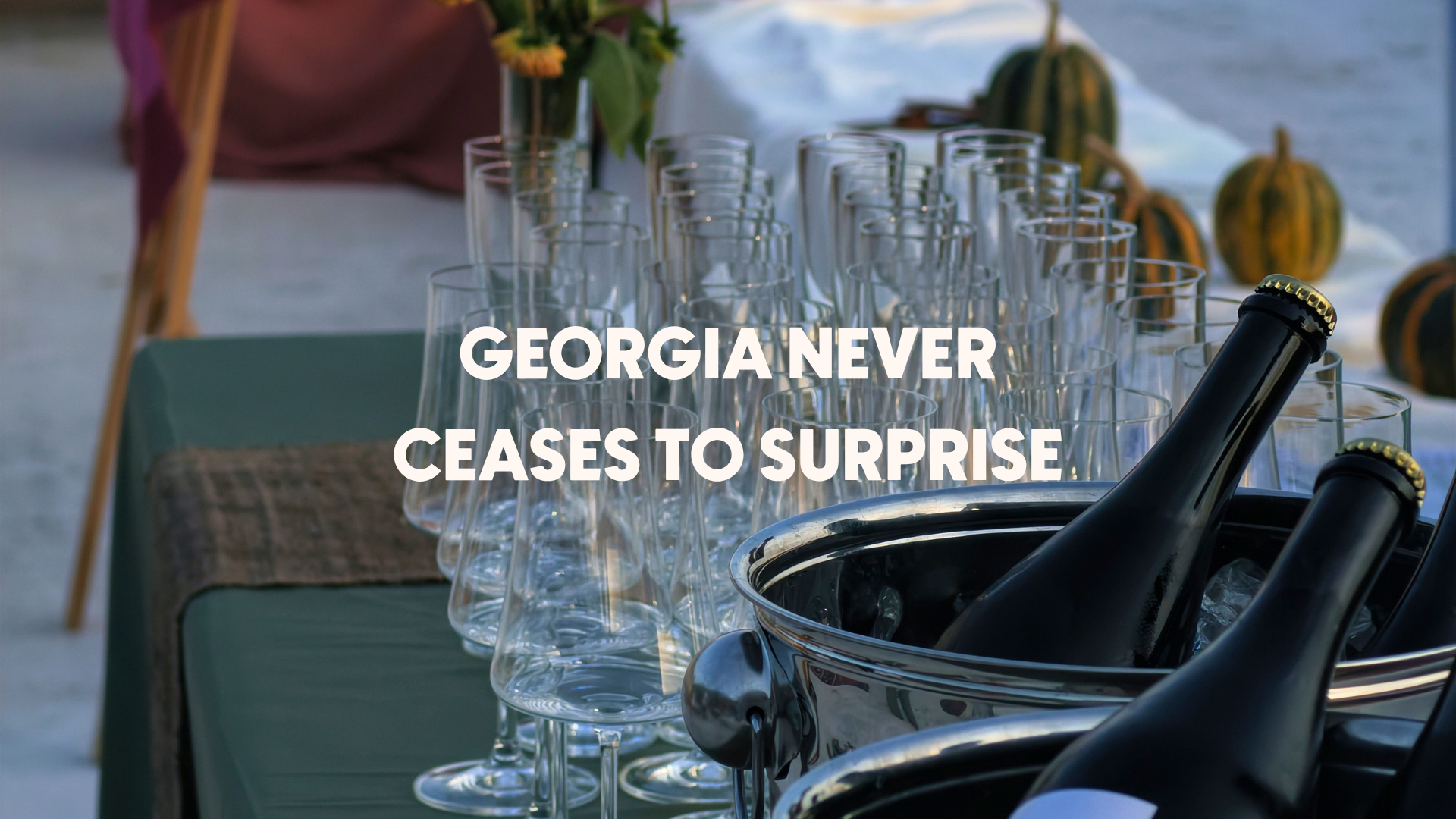
Image Credit : Daria Kholodilina
30 Sep 2026
Qvevri in the Pool, DJ Under the Stars and Polyphonic Singing in the Vineyard: Georgia Never Ceases to Surprise
What happens when you bring a group of British wine writers, educators, presenters, content creators and a wine buyer to Georgia for four very full days?
Quite a lot, as it turns out.
On 21–25 September 2026, the National Wine Agency of Georgia and Swirl Wine Group hosted an incoming UK press and trade trip designed to show just how broad Georgian wine has become: from tiny family cellars and traditional qvevri workshops to established estates, making pét-nats, classical wines and throwing some very unexpected parties.
The group included Alice Lascelles, Drinks Editor and Columnist at Financial Times HTSI; wine presenter and educator Amelia Singer; writer and International Wine Challenge Senior Panel Chair Christine Austin; food, wine and travel writer Susan Low; wine writer and broadcaster Helena Nicklin; wine educators and content creators Georgie Fenn and Candace Strickland; wine tourism and marketing expert Shalini Singh of Wine Telegrams, Sera Crow of WSET School London; and Benjamin Webb, wine buyer at Ellis Wines.
Over four days, the group travelled through Tbilisi, Kartli and Kakheti, meeting winemakers, tasting wines, seeing qvevri being made and, importantly for anyone reading this from Britain, discovering producers whose wines can already be found back in the UK.
Kakheti: wine, harvest and a qvevri in the pool
At Chateau Buera, overlooking Lopota Lake, the programme quickly moved beyond a conventional winery visit. There was a masterclass led by Buera’s sommelier Gabriel Menabde and brilliant Dea Purtseladze who's taking care of the wine sales abroad. They offered the guests eight wines and different winemaking approaches, followed by grape picking, Kakhetian food, churchkhela and khinkali making, polyphonic singing and, eventually, dancing in an old wine press.
Chateau Buera is already available in the UK through Georgian Wine Guild and at Saperavi Social in London. Look out in particular for the Mtsvane Qvevri Reserve and the classically made Kisi-Mtsvane – a useful reminder that Georgian producers do not have to choose between qvevri and more familiar winemaking styles.
From there, the group went back to the vessel itself, visiting the Kbilashvili family’s qvevri workshop to see how these enormous clay vessels are made by hand. It is one thing to talk about qvevri fermentation at a tasting in London; quite another to watch a qvevri slowly taking shape in the hands of a family that has been making them for generations.
The day finished at Anapea Village, a wonderfully eccentric combination of winery, museum, rural life and Georgian hospitality. After a tour, tasting and bread-making, dinner stretched into the night.
Anapea wines are available in the UK thanks to Modal Wines, so take notes and give them a try!
Science and qvevri romance
The following day took the guests deeper into Kakheti, beginning at Ikano Estate near Nekresi.
The winery visit had a lot of extra activities such as chacha distillation, another very light lunch that felt like an ample dinner, and live folk music, but the wines themselves deserved plenty of attention. Ikano is already being poured in London at DakaDaka, with the Kisi 2021 and Mtsvane 2021 crafted by Data Gamgoneishvili particularly worth looking for.
Then came one of the wine-geekiest tastings of the trip: Dakishvili Winery in Shalauri.
Gogi Dakishvili is one of the most experienced and influential winemakers working in Georgia today, and the tasting became a brilliant demonstration of just how many variables sit behind the deceptively simple words qvevri wine.
The group tasted wines showing how different percentages of skins, different lengths of skin contact and different vineyard locations can completely change the result in the glass. Qvevri is a vessel, after all – not a flavour, a grape variety or a single style of wine.
For British drinkers, this is also one of the easier stories from the trip to follow home. Dakishvili wines are imported into the UK by Clark Foyster Wines, so the tasting does not necessarily have to end in Kakheti.
Sunset among the vines
The final Kakhetian winery visit was Ethno Winery in Manavi, where the owner, Lado Robakidze, served the guests a pét-nat aperitif on the terrace. It was a long evening of wine, food, heartfelt toasts and sunset views over the vineyards!
The tasting included four wines from the premium Ethno Collection, followed by dinner from Otsy chef Giorgi Ninua. Outside, the view stretched across the vines towards the old oak tree that now appears on Ethno’s new labels.
Ethno is available in the UK through Saperavi Social. The bottles to look out for are Cuvée and Khikhvi-Mtsvane!
Don’t skip Kartli
Kakheti inevitably plays a major role in any Georgian wine trip, but this one also made time for Kartli.
At Ori Marani in Igoeti, Bastien Warskotte – originally from Champagne – and Nino Gvantseladze bring together Georgian and French winemaking ideas, working with qvevri and old oak and with local varieties including Chinuri, Goruli Mtsvane, Shavkapito and Danakharuli.
The French connection theme was supported by Chateau Mukhrani, one of Georgia’s historic estates, founded in the 19th century by Prince Ivane Mukhranbatoni and built around a very different model of Georgian wine production: a fine estate with its own vineyards, and long underground cellars. Nowadays, a strong European influence is brought in by the German winemaker Patrick Honnef to the realm of Georgian varieties and traditions.
For anyone wanting to continue exploring Kartli in Britain, Chateau Mukhrani is represented by Georgian Wine Guild. Shavkapito is worth seeking out – one of Kartli’s distinctive red grapes and still a relatively rare sight on UK shelves.
And there was also the Tbilisi wine rave!
One more highlight deserves its own paragraph. At Lobster Wine House, hosted by winemaker Nino Kakutia, Georgian sparkling wine met a DJ set under the Tbilisi night sky. Nino’s own wines made in qvevris stocked in an old swimming pool were poured alongside Wet Dog Winery, Iveritas and Pi Winery, turning what could have been another formal tasting into something closer to a tiny wine rave.
Nino Kakutia’s sparkling wine is available in London at Amkari Wine Bar, alongside wines from her friend at Wet Dog Winery. Pi Winery, meanwhile, works in tiny batches, making remarkably precise Kakhetian whites and reds from old vines, imported by Naked Wines.
Iveritas is another producer making very fine expressions of Bolnisi terroir and currently looking for a UK importer.
Perhaps that is the best way to sum up the trip: Georgia’s 8,000-year wine history is important, and qvevri remains central to understanding the country’s wine culture. But Georgian wine today is not standing still. It can mean ancient clay vessels and pét-nat, polyphonic singing and carefully controlled skin contact, historic estates and tiny family cellars, old vines and DJs under the stars.
Most importantly, many of these wines no longer require a flight to Tbilisi to taste them. They are already appearing in British restaurants, wine bars and shops, while another generation of Georgian producers is actively looking for its place on UK wine lists.
Admittedly, the vibe of stomping freshly picked grapes while five men in traditional chokhas are singing about love may be harder to recreate at home.
