
20 Nov 2026
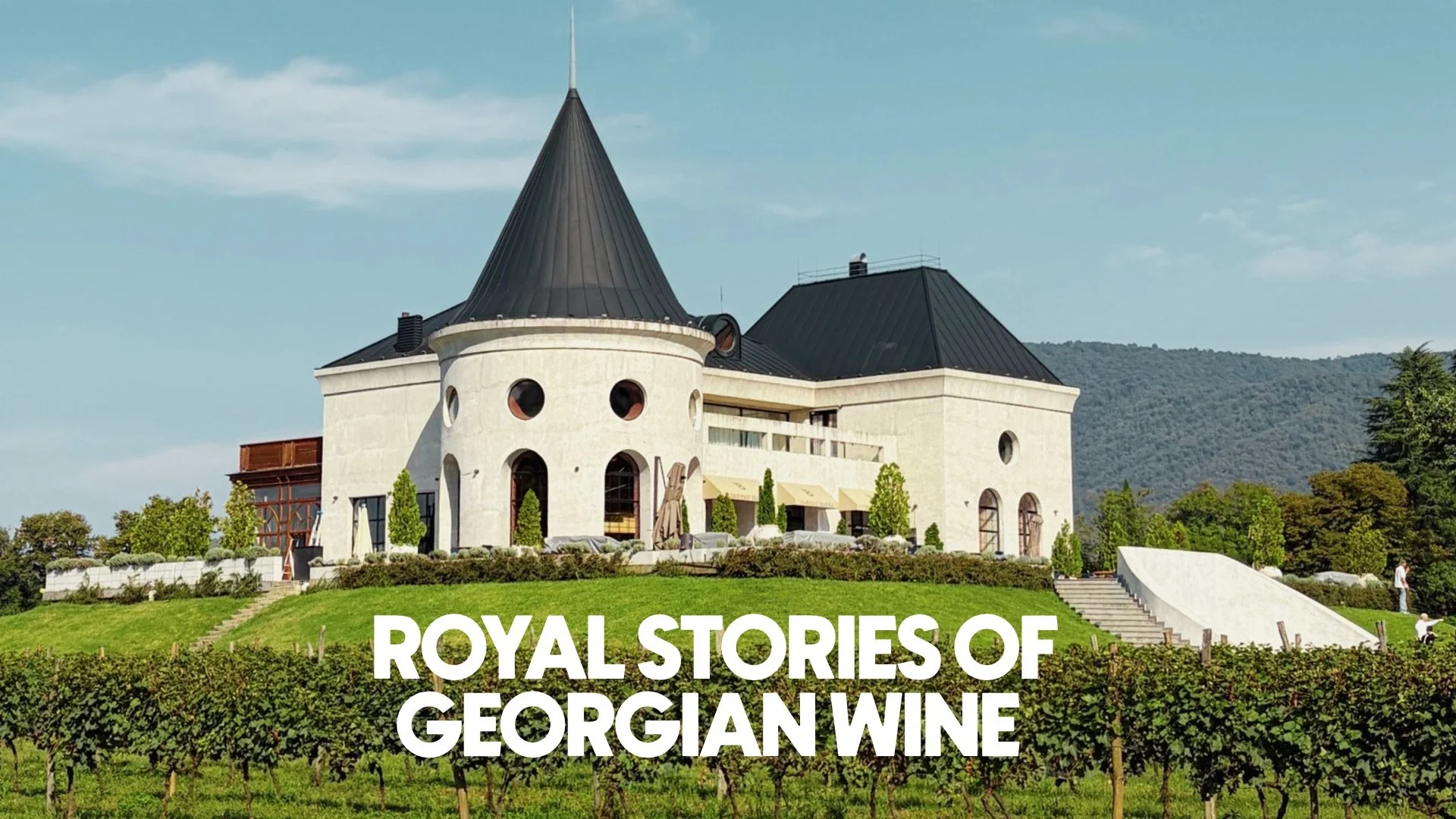
When we talk about the 8,000-year history of Georgian wine, we often picture clay vessels buried in the ground, small family vineyards and generations of winemakers passing their knowledge from father to son. However, there is another fascinating chapter in Georgian wine history – that of kings, princes, aristocrats and their wine estates.
For centuries, Georgia was ruled by the Bagrationi royal dynasty, while noble families such as the Chavchavadzes, the Orbelianis and the Dadianis played an important role in the country's cultural and economic development. In the 19th century, Georgian aristocrats became particularly interested in European winemaking techniques, introducing new approaches to wine production, bottling and ageing.
Unfortunately, the Bolsheviks had rather different ideas about private property. Following the Soviet Russian invasion of Georgia in 1921, aristocratic families were persecuted, estates were nationalised and many historic residences fell into disrepair. Wine production increasingly became a matter of meeting state targets rather than expressing the character of individual vineyards.
Today, some of these estates have been brought back to life, while a new generation of Georgian winemakers is creating châteaux of its own.
Château Mukhrani: A Georgian Prince with a French Vision
Located in the Kartli wine region, less than an hour's drive from Tbilisi, Château Mukhrani owes its existence to Prince Ivane Mukhranbatoni (1812–1895), a member of the Bagrationi royal family.
Inspired by his travels to France, the prince brought European winemaking expertise to his ancestral estate. The first Château Mukhrani wines were bottled in 1878, while the palace, designed with the help of French architects, was completed in 1885.
The estate brought together vineyards, wine cellars, a palace and extensive gardens – the classic château concept, adapted to Georgian soil and grape varieties.
After decades of Soviet neglect, the revival of Château Mukhrani began in 2002. The fully restored palace officially reopened in 2022.
Today, the winery champions indigenous Kartli grape varieties such as Goruli Mtsvane, Shavkapito and Tavkveri, alongside Saperavi and international varieties. Its portfolio includes traditionally made qvevri wines as well as wines produced using European methods.
For anyone planning a Georgian wine holiday, the estate offers wine tastings, cellar tours, palace visits and a restaurant.
Where to buy Château Mukhrani wines in the UK: Explore the selection at Georgian Wine Guild.
Vazisubani Estate: Georgian Aristocratic Vibe with a British Touch
In the heart of Kakheti, Georgia's largest wine region, stands the former residence of Sulkhan Chavchavadze, a Georgian aristocrat and winemaking pioneer who developed the estate in 1891.
Chavchavadze was part of a generation of Georgian nobles interested in modernising agriculture, viticulture and rural life. The Soviet occupation brought an abrupt end to this chapter of the estate's history.
In 2013, a project to revive the abandoned property began, restoring its winemaking traditions and transforming the historic mansion into a 19-room boutique hotel.
British visitors might find something surprisingly familiar here: the interiors feature authentic English Victorian furniture sourced from the UK. Georgian and British architects and designers worked together on the restoration.
The winery produces wines from Kakhetian grape varieties, including Rkatsiteli, Kisi, Khikhvi, Kakhuri Mtsvane and Saperavi, with traditional qvevri winemaking playing an important role.
Where to buy Vazisubani Estate wines in the UK: Try the Vazisubani Estate Collection Mukuzani from Soho Wine Supply.
Château Buera: A Château for the Next Generation
Not every Georgian château needs a prince in its family tree. Established in 2018 by Goga Maisuradze, the founder of Lopota Lake Resort and Spa, Château Buera represents a contemporary interpretation of the Georgian wine estate.
Located in Kakheti's Napareuli area, the winery was built around Maisuradze's ambition to produce high-quality Georgian wines capable of ageing. His family continues this work today.
Château Buera combines traditional Georgian qvevri winemaking with European techniques, including oak maturation. Alongside established varieties such as Saperavi, Kisi and Rkatsiteli, the winery cultivates Buera, a rare indigenous Kakhetian grape that inspired its name.
With its vineyards, restaurant, wine cellar and views of the Greater Caucasus, Château Buera is also a destination for wine tourism and events in Georgia.
Where to buy Château Buera wines in the UK: Discover Château Buera Saperavi Qvevri at Georgian-Wine.co.uk.
These three estates demonstrate how much there is to discover beyond Georgia's ancient winemaking history. After all, every historic château was once somebody's ambitious new project.
Explore more Georgian wines available in the UK through our Georgian wine stockist list.
