
What Is Amber Wine Supposed to Taste Like?
20 Aug 2026
Amber wine can be confusing. One bottle smells of apricots and tea; another is all dried herbs and nuts. A third is light, floral and barely amber at all. So, which one is correct?
Well, it’s all of them.
Amber wine is made from white grapes fermented with their skins, and sometimes with the pips and stems too. It is essentially white wine made more like red wine. The skins contribute colour, flavour and tannin, while the length of contact helps shape the result. A few days can produce a golden, gently textured wine; several months may create something darker and considerably more structured.
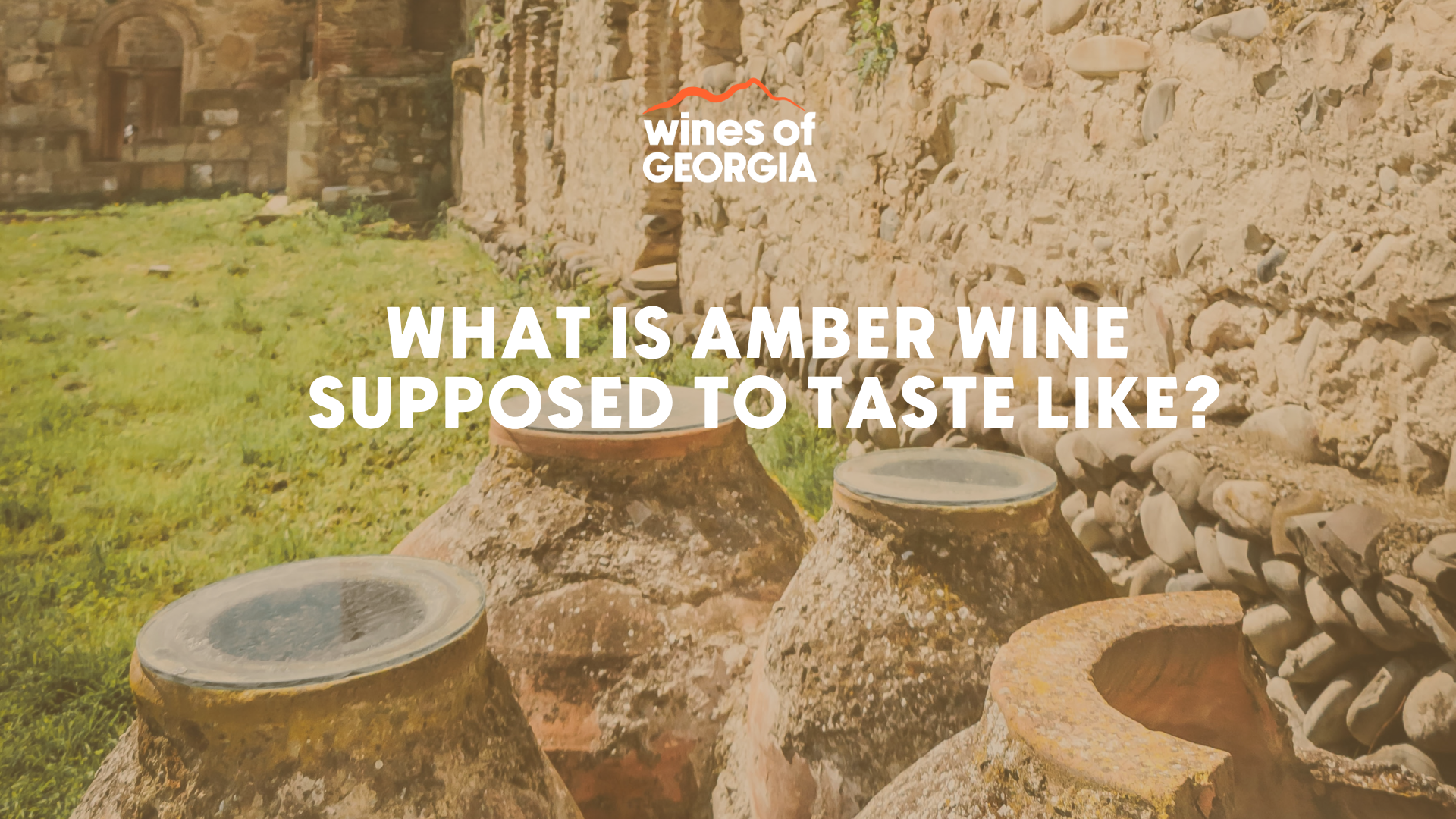
In Georgia, the term “amber wine” is generally preferred to “orange wine”, although both describe the same broad category. Many traditional examples are fermented and matured in qvevri: large clay vessels buried underground. Georgia’s ancient qvevri winemaking method was added to UNESCO’s list of Intangible Cultural Heritage in 2013.
But amber wine does not have one set flavour. After all, you cannot tell exactly how a white wine will taste simply because it is white. It might be citrusy, tropical, floral, mineral, creamy or grassy. The same is true of amber wine: the colour and method give us some clues, particularly about texture and tannin, but they do not prescribe one flavour.
As a useful rule of thumb, the fruit character of the grape often remains recognisable. If a variety shows apple, peach or citrus in a conventional white wine, you may find the same fruit in its amber version — but transformed into baked apple, dried peach or candied citrus. It is a little like seeing the fruit later in the season, after sunshine, time and perhaps a spell in the oven.
Common flavours include dried apricot, quince, baked apple, orange peel and persimmon. You may also find tea leaves, walnuts, honey, hay, dried flowers, herbs and gentle spice. Despite these ripe-sounding descriptions, most Georgian amber wines are dry.
Texture is just as important as aroma. Tannin, the drying sensation familiar from red wine,is normal in amber wine. It may feel like strong black tea, dry the gums or leave a grippy finish. This can be surprising, but it also makes amber wine particularly useful at the table.
The grape variety matters too. Rkatsiteli often gives structured wines with quince, apple skin and herbal notes. Kisi can be more aromatic, with stone fruit, flowers and spice. Chinuri may feel leaner and fresher, while western Georgian grapes such as Tsolikouri and Tsitska can produce brighter styles with citrus, herbs and lively acidity.
Not every unusual aroma is part of the experience, however. Vinegar, nail-polish aromas, and pronounced bruised apple flavours are faults — not proof that a wine is natural or traditional. Amber wine can be wild and characterful, but it should still feel balanced and enjoyable.
Serve lighter examples lightly chilled, around 10–12°C, and fuller, more tannic wines slightly warmer. A large glass and a little air can help the aromas unfold. Try them with roast chicken, mushrooms, hard cheese, spiced vegetables, grilled pork or, naturally, a Georgian supra.
So, what is amber wine supposed to taste like? Not one single thing. Think of it as a spectrum: from fresh and golden to dark, tannic and almost red-wine-like. Expect familiar fruit in a different form, more grip and more spicy flavour than you would find in the average white wine.
