
12 Oct 2026
A few field days in Georgia can change a lot of misconceptions and assumptions about Georgian wine.
During the Georgian Wine UK September trip, supported by the National Wine Agency of
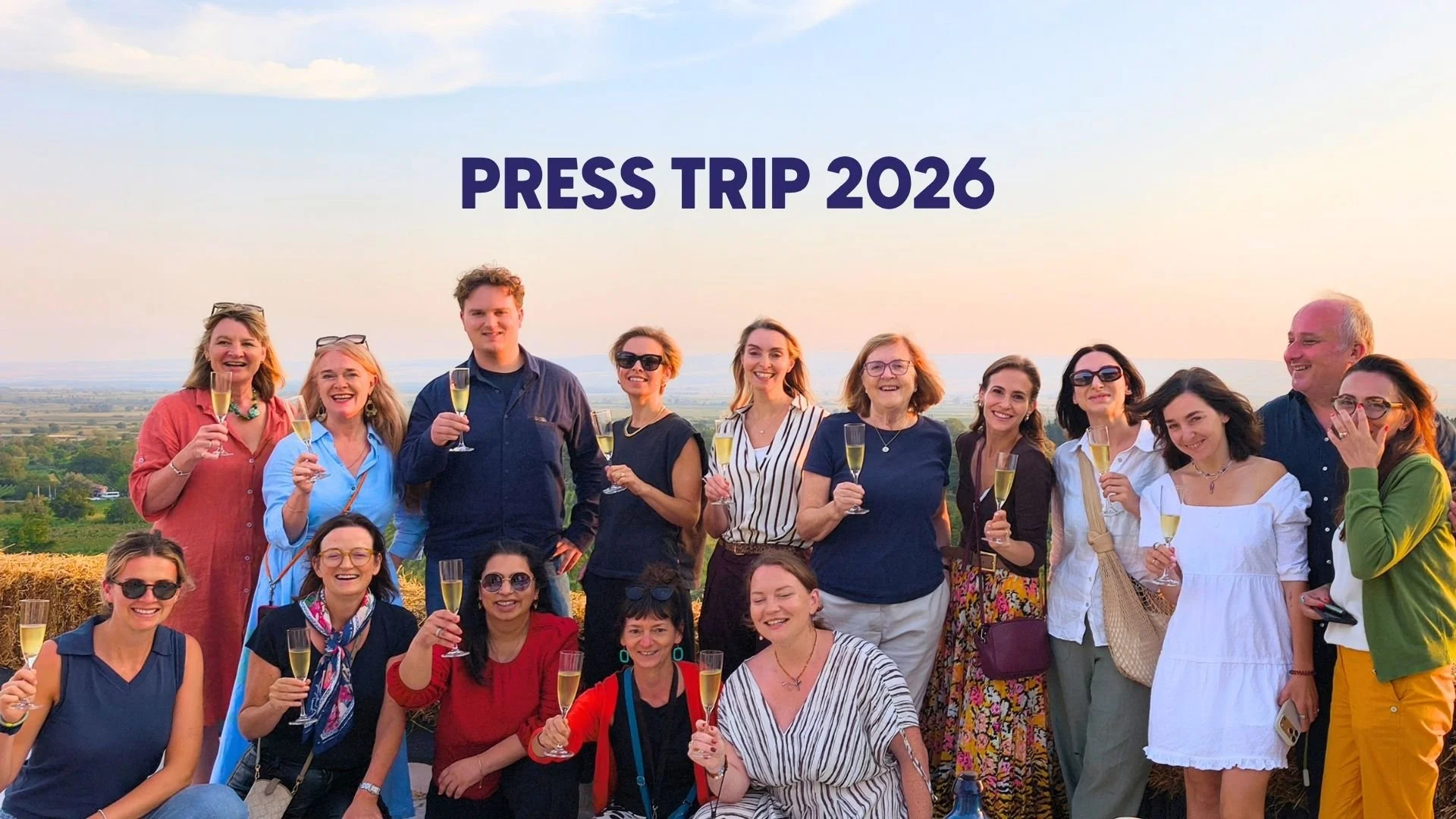
Georgia, we travelled with a group of UK wine writers, educators and creators through Tbilisi, Kartli and Kakheti. We asked what surprised them, what they had learned, and what they would take back to the UK. Their answers kept coming back to diversity, context, hospitality and a wine culture that becomes tangible and real, once you experience it personally.
There was a red line going through every conversation: Georgia is so much bigger than amber wine!
Helena Nicklin, wine writer and broadcaster, said she had “loved learning that Georgian wine isn’t just about amber wine”, pointing instead to “so many other indigenous grape varieties to explore”. Christine Austin, wine writer and IWC Senior Panel Chair, found new sides to familiar grapes too. On Saperavi, she liked “the complexity, but it also has a softer heart” – a useful reminder that Georgia’s best-known red grape does not have to mean one fixed, powerful style.
For Sera Crow of WSET School London, one of the strongest impressions was how deeply wine sits inside everyday culture. “There is so much life,” she said, describing “wine in everything here in Georgia”. Wine was not separated from food, landscape, music or family life; it was part of the same picture.
Amelia Singer, presenter and wine educator, summed it up as “the literal blend of people, amazing wine, wonderful food, and music”, which was very true, as we had live music almost every day throughout the trip. Susan Low, a food, drink and travel writer, was struck by seeing traditions she already knew about in their proper setting. Marani, qvevri and the wines themselves become easier to understand when they are no longer isolated technical terms!
The winery visits underline the definition of Georgian hospitality. Shalini Singh of Winetelegrams highlighted this as the most impressive thing about the visit: “They’re just so welcoming. They’ll open all the bottles for you.” Tasting with producers also showed why the wines can differ so much from village to village, cellar to cellar and family to family.
The trip challenged another common assumption: that amber wine has to be difficult. Susan Low noted simply that “there are really good amber wines out there”, including wines that are neither excessively tannic nor deliberately wild. Skin contact is a technique, not a flavour profile.
Candace Strickland, wine communicator and educator, described Georgian amber wine as “a whole other world of wine” and “a different soul of wine, which is really exciting”. She appreciated the blend of novelty and familiarity of wine styles – one definitely doesn't need special training before drinking them.
And then there is the relationship between history and the present. Sarah Abbott MW of Swirl Wine Group described Georgia as “really unique, rooted and passionate about its heritage”, while also seeing its wines increasingly in a contemporary fine-wine context. The ancient story still matters; it simply does not need to do all the work.
For the UK market, that may be one of the most useful conclusions from the trip, especially when Georgian Wine Month kicked in. Georgian wine becomes easier, rather than harder, the closer you look. Ancient methods sit alongside modern winemaking, familiar grapes reveal unexpected sides, and amber wine is only one part of the picture. There is much more to talk about than Georgia having made wine for a very long time.
