
30 Oct 2026
Why are Georgians using qvevri after all this time? This is one of the most frequently asked questions among the people new to Georgian wine. We talk a lot about qvevri when discussing our country’s winemaking culture: we know that these large clay vessels have been used for centuries, that they're buried underground, and that the traditional Georgian winemaking method is recognised by UNESCO.
But what does a qvevri actually do to the wine?
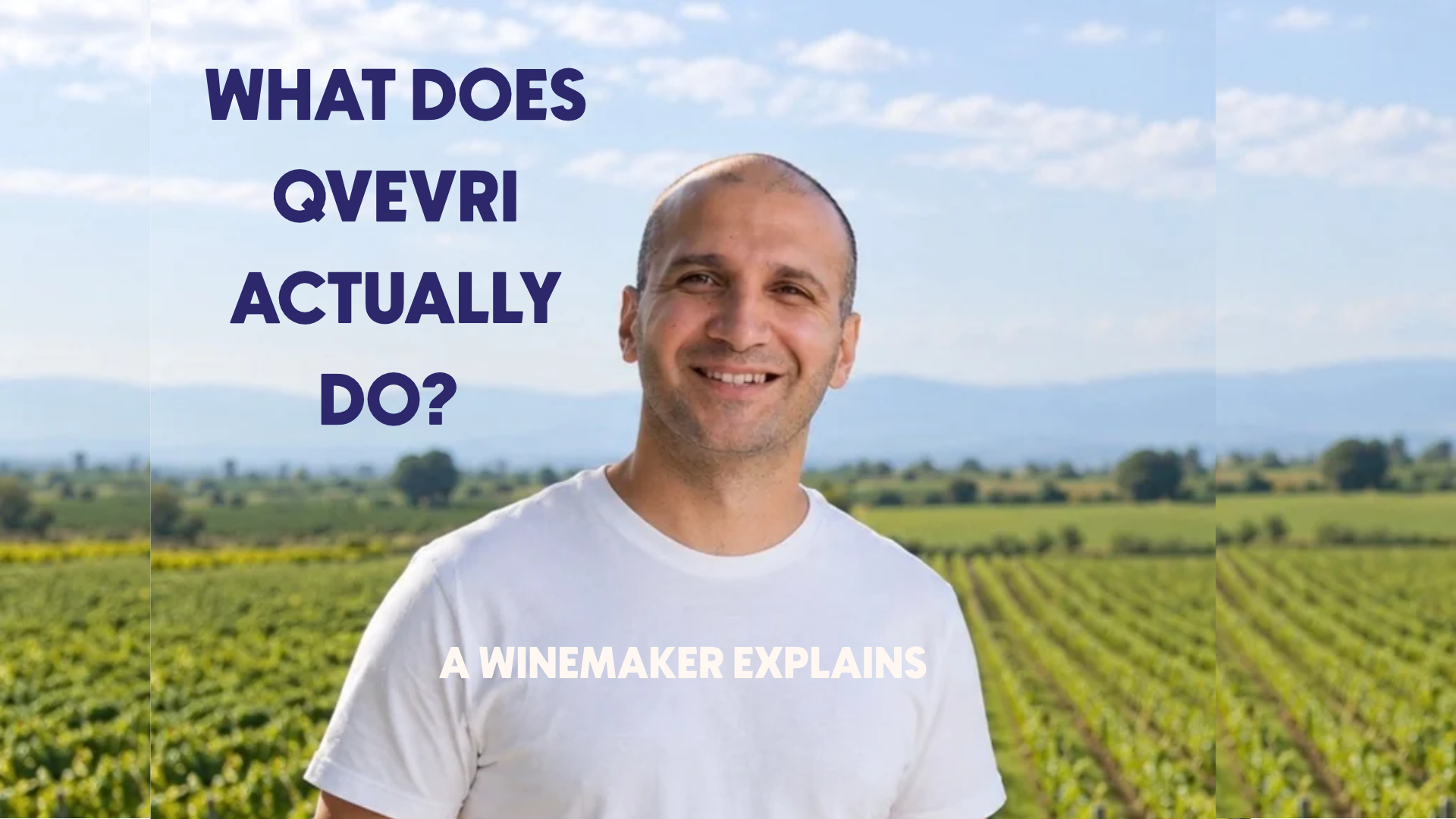
During our visit to Ikano Estate in Kakheti, we put this question to the winery's winemaker, Data Gamgoneishvili. Having studied winemaking in France and Germany, Data is familiar with modern European techniques, but also works with Georgia's traditional clay vessels. His explanation started with the cultural significance of qvevri before moving on to the practical side of winemaking.
First, there's temperature. Qvevris are traditionally buried in the ground, which helps protect the wine from sudden changes in temperature. The surrounding earth acts as insulation, providing relatively stable conditions for fermentation and ageing.
This doesn't mean that the temperature inside a qvevri remains constant. Fermentation generates heat, after all. But the vessel's position underground helps moderate changes, particularly as the seasons change.
Then, there's oxygen. Clay is different from stainless steel, which is airtight. Depending on how a qvevri is made, fired and treated, a small amount of oxygen passes through its walls.
This gradual exposure can affect how wine develops during the ageing stage, particularly its tannins and other phenolic compounds. The effect is somewhat comparable to what happens in oak barrels, although qvevri doesn't contribute the wood-derived flavours associated with oak.
In fact, a good qvevri wine shouldn't taste of clay (or anything earthy or dirty!) Those aren't characteristics to look for at all.
Data also mentions natural stabilisation, another practical advantage of traditional qvevri winemaking. After fermentation, wine is often left to rest in the vessel throughout winter. As temperatures fall, tartrate crystals may form and settle at the bottom, together with other sediment. The qvevri's narrow base helps collect that sediment, making it easier to separate the clear wine.
Of course, tartrate crystals can form in stainless steel tanks and other vessels too. But here's where the traditional method comes in handy: rather than speeding things up with refrigeration or additional treatments, winemakers can give the wine time to settle and stabilise naturally. It doesn't guarantee complete stability, but it can mean less intervention in the cellar, which is a part of Ikano’s philosophy.
Curious to know how all this theory manifests into practice? Taste Ikano Estate’s wines in the UK! Their Kisi-Rkatsiteli and Saperavi are available to buy online at Jeroboams.
